


Archery Master: Bow and Arrow
4.41.67K Reviews
App Specs
- Version
- 1.8.8
- Updated On
- License
- Free
- Downloads
- 5,000,000+
- Developer
- Arcloom
- Categories
- Sports
- Platform
- Android, iOS
Screenshots
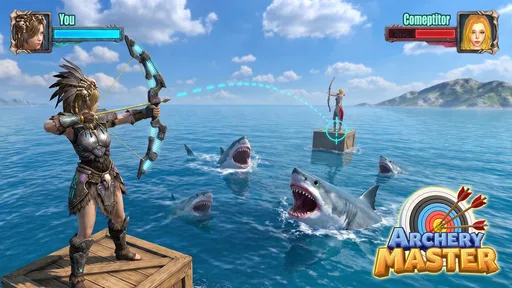
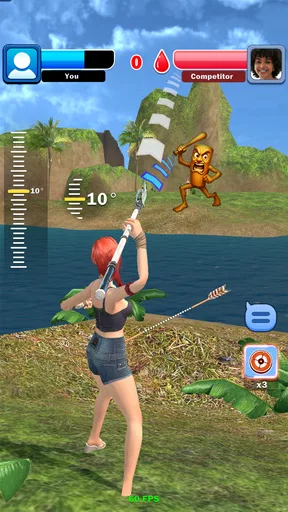

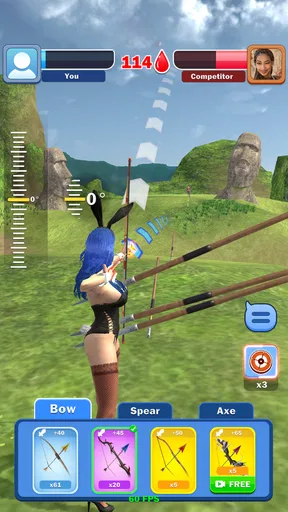
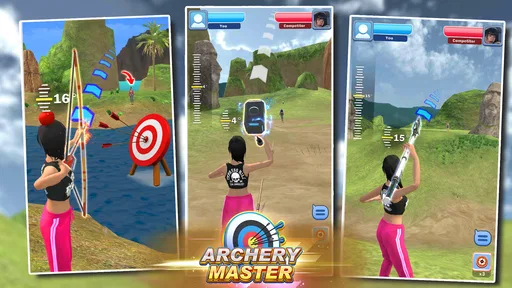
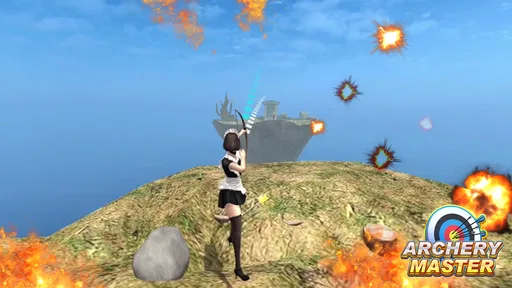
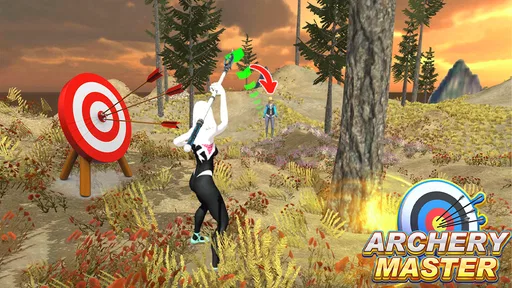
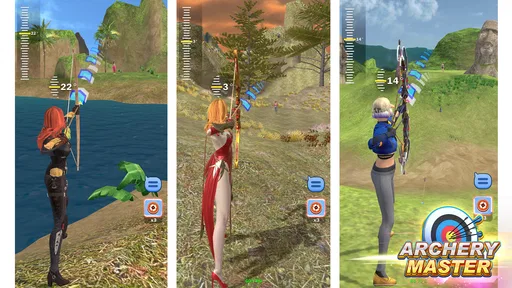
 Analysis by AppCompare
I spent time with Archery Master: Bow and Arrow as a quick competitive sports game, and my first impression was clear: it is built around the tension of a single shot rather than a long list of complicated systems. You face another archer in a one-on-one duel, adjust your aim, read the wind, and try to make each arrow count. That focus makes it easy to understand, but it also means the game depends heavily on whether you enjoy repeating a precise routine and learning from small mistakes.
Developed by Arcloom, this free Android game sits in the mature end of the sports category, with an age rating of Mature 17+. It has reached more than five million installs and holds a 4.4 average from around 159 thousand ratings, so it is clearly not an obscure experiment. I can see why it has attracted players: the basic idea is immediately approachable, matches are easy to understand, and the result of a duel usually feels connected to the quality of the shot rather than to a complicated rulebook.
How the current version feels to play
I approach the current version as a game whose appeal rests on making each shot more deliberate, not on adding complexity around it. A useful habit is to keep your adjustments consistent, so a result tells you something instead of leaving you guessing which change mattered. That makes it easier to settle into a repeatable routine, and it also highlights where the available controls may ask for patience.
A focused duel instead of a full archery simulation
The central appeal is the one-versus-one format. You are not managing a large team, building a club, or navigating a broad sports career. The attention stays on the bow, the target, the angle, and the conditions affecting the arrow. That gives each turn a small but meaningful decision: rush and accept a less controlled shot, or take a moment to line everything up more carefully.
I like this structure for short sessions. It works when I have only a few minutes and want something more engaging than an idle game, but less demanding than a long strategy match. The game does not need a large explanation before the basic challenge makes sense. Aim, account for the environment, release, and see whether the result is strong enough to beat the opposing archer.
The simplicity is also the main limitation. Players looking for a deep sports management game, a broad single-player campaign, or a realistic simulation of every part of archery may find the experience narrow. Its strength is the duel itself, not the amount of content surrounding that duel.
Wind and angles are the real test
The store summary emphasizes wind and angles, and those are not decorative ideas in the way I approached the game. A shot that looks visually aligned can still miss when the conditions are read incorrectly. I found it more useful to think in terms of correction than perfection: first identify the general direction, then make a modest adjustment instead of dragging the aim dramatically and creating a new problem.
Worth Reading Before You Choose

Google Maps Gets You There, Until the Map and the Moment Disagree

Square Team Under Pressure: Can It Recover When Workflows Break?

Yandex Weather Makes Rain Forecasts Practical

McDonald’s App Builds Community Through Shared Routines, Not Social Feeds

Royal Kingdom Makes Match-Three Feel Like Progress

EA SPORTS FC Mobile 26 Is a Bigger Football Game, but It Takes Time
One practical habit helped me more than simply trying to shoot faster. I began treating early attempts as information-gathering shots. If the arrow landed slightly off the intended point, I used that result to judge how much correction was needed on the next turn. This is especially useful for players who initially assume every miss means they need a completely different aim. Often, a smaller change is the better response.
The important skill is not just aiming at the target; it is separating a bad angle from a bad wind adjustment. That distinction makes the game more satisfying over time. It also gives experienced players an advantage over someone who relies on quick swipes or guesses.
Why a short match can still create pressure
One-on-one play makes mistakes feel personal. In a larger team game, a poor moment can be hidden by several other players or a long match. Here, a weak shot is immediately visible, and the opponent’s response can turn a small error into a difficult recovery. I enjoyed that pressure when I was in the mood to concentrate, but it could feel unforgiving after several losses.
This is not the sort of sports game I would recommend when I want a relaxed experience with almost no consequences. It asks for attention, particularly when the wind or angle makes a familiar shot behave differently. The controls may be simple, but the mental process becomes more demanding as I stop relying on instinct and start trying to make repeatable decisions.
What the current release says about the game’s direction
The current version is 1.8.8, while the game was released on August 15, 2024. That combination suggests a product that has moved beyond its initial launch build rather than remaining frozen at its first release. I would still separate that observation from any assumption about future plans: a version number shows continued iteration, but it does not promise a particular feature, balance change, or new mode.
For someone installing it now, the practical point is that the experience should be judged as an established, actively presented game rather than as a first-day prototype. Existing players may notice that the title has had room to develop since launch, but the core identity remains the same: compact archery duels where control and reading the shot matter more than collecting a large amount of unrelated content.
How the game fits into everyday use
A realistic use case is a short break between tasks. I can imagine opening it while waiting for a bus, taking a few turns, and closing it without needing to remember a complicated story or a long chain of objectives. The one-on-one design suits that pattern because the purpose of a session is immediately clear.
It also works for a player who enjoys practicing a single skill. Instead of switching between racing, combat, and puzzle mechanics, you repeatedly refine the same basic action. That repetition can become satisfying when each adjustment feels deliberate. I found it particularly suited to players who like games where improvement comes from observation rather than from simply unlocking another tool.
On the other hand, I would skip it if my main reason for playing sports games were authentic match presentation, team tactics, or a large variety of disciplines. A football, basketball, or racing game will offer a broader sports fantasy. This title is much more specific, and its appeal depends on whether archery duels themselves sound interesting to you.
What changes mean for people who already play
For existing users, the move to version 1.8.8 is most relevant as a sign that the game has continued past its original release. I would approach an update with sensible expectations: install it to stay on the current build, but do not assume that every update will transform the underlying experience. If you already enjoy the core aiming loop, continued version development is encouraging. If you dislike one-on-one precision games, a newer version may not change that fundamental fit.
The best way for a returning player to judge the current state is to pay attention to how consistently shots behave during normal play. Rather than relying only on a win or loss, compare your intended aim with the actual result and notice whether your corrections become more controlled. That personal consistency is a better measure of progress than chasing a single fortunate hit.
New players should also avoid judging the game entirely by their first few attempts. Early misses can come from misunderstanding how to compensate for conditions, not necessarily from poor controls. I recommend making one adjustment at a time. Changing the angle, release timing, and wind correction all at once makes it impossible to know what helped.
Where the free model deserves attention
The game is free to download, but it includes in-app purchases ranging from $0.99 to $99.99 per item. That range matters because the entry cost and the possible spending experience are very different things. I would begin by playing without buying anything and deciding whether the duel mechanics hold my attention on their own.
For a competitive game, spending deserves extra caution. If a purchase affects convenience or progression, the important question is not whether an item looks attractive, but whether it changes how fair the duel feels to you. A player who wants a purely skill-focused experience should keep a clear personal limit and avoid treating a losing streak as a reason to spend. The game’s central promise is most convincing when improvement comes from better decisions and practice.
That does not make every purchase automatically bad, but it does mean the free starting point should be tested properly. I would play enough to understand the aiming loop, the effect of wind, and the pace of progression before deciding whether optional spending adds genuine enjoyment. If the basic exchange of shot, correction, and response already feels repetitive, buying more content is unlikely to solve that issue.
Who will get the most from it
I think the best audience is someone who enjoys compact competitive games and likes seeing a direct connection between a mistake and its consequence. The game is also a good match for players who prefer a sports theme without the complexity of managing a full roster or learning a large set of controls.
It may appeal to casual players because the concept is easy to grasp, but “casual” does not mean completely passive. To improve, you need to watch the arrow’s result, understand why the shot missed, and resist making random corrections. That gives the game more depth than its straightforward presentation initially suggests.
It is less suitable for children because the content rating is Mature 17+. It is also not ideal for someone who wants a calm, noncompetitive archery toy. The duel structure creates a clear winner and loser, and that competitive loop is central rather than optional decoration.
Remaining gaps and sources of friction
The biggest gap is breadth. The focused design helps the game get to the fun quickly, but it can also make sessions feel similar if I am not actively trying to improve my technique. Players who need frequent new environments, varied objectives, or a strong narrative reason to continue may run out of motivation sooner than players who enjoy mastery through repetition.
Another possible friction point is the narrow margin between a careful correction and an overcorrection. That is part of the challenge, but it can feel harsh when I am still learning how the conditions influence a shot. The experience rewards patience, so anyone expecting fast arcade action should understand that the satisfying moment usually comes from a well-read shot, not from constant movement.
The purchase range is another factor to keep in mind. Free access makes trying the game straightforward, but the presence of high-priced individual items means I would not recommend playing without considering spending boundaries. This is especially important for competitive players who may be tempted to buy after a frustrating run.
Compared with a traditional archery simulator, this game is easier to pick up and more focused on direct competition. Compared with a broad arcade sports title, it offers less variety but gives its single mechanic more room to matter. Compared with casual target-shooting games, the opponent adds pressure and makes every adjustment feel more consequential. The right alternative depends on whether you value precision, variety, realism, or relaxation most.
Practical ways to play more intelligently
Start with a stable aiming routine. Move the aim gradually, pause briefly, and release only after checking the angle. This reduces the chance of confusing hurried movement with a genuine correction.
Use misses as evidence. If the arrow is close to the intended area, make a small change first. A dramatic adjustment is better reserved for a clearly misunderstood condition.
Separate practice from competition mentally. During a losing streak, focus on identifying one repeatable mistake instead of trying to win the next turn at any cost.
Set a spending limit before testing in-app purchases. The game is free to start, and understanding whether the core duel is enjoyable should come before paying for optional items.
Play in short blocks if concentration drops. Since the game depends on careful reading, continuing while distracted can teach bad habits rather than improve your aim.
What I would watch in future updates
If Arcloom continues developing the game, I would be most interested in changes that improve the long-term value of the duel without weakening its skill focus. More meaningful ways to practice wind and angles would be useful, especially if they help new players understand why a shot behaves differently. Clearer progression would also matter if it gives returning players a reason to keep refining their technique rather than simply repeating matches.
I would also watch how the balance between skill and purchases develops. The strongest version of this game is one where players feel that careful aiming and learning remain important. Any future change that makes spending feel necessary would reduce the appeal for people who came specifically for competitive precision.
Those are expectations, not promises. The current evidence is the existing release history and version 1.8.8, not a guarantee of a particular roadmap. For now, I would judge the game on what it already does: deliver a compact archery contest with wind, angles, and enough pressure to make a single shot matter.
My final recommendation
I recommend giving this sports game a try if you like focused one-on-one challenges and enjoy improving through small, measurable decisions. Its free price makes experimentation easy, and the large player base suggests that the basic idea has found an audience. I especially like it as a short-session game because it does not ask me to commit to a long match or a complicated management system.
I would be more cautious if you want extensive variety, a realistic professional archery simulation, or a completely consequence-free experience. The game’s narrow focus is both its identity and its limitation. It becomes more rewarding when I slow down, read the conditions, and treat each miss as useful feedback; it becomes less appealing when I expect constant novelty or try to rush every shot.
Overall, Archery Master: Bow and Arrow is a focused free sports game that earns its best moments through patience and precision. I would install it for quick competitive sessions, keep spending optional, and give the controls enough time to become familiar before deciding whether it is for me. If the idea of beating another archer with a better read of the wind sounds more appealing than managing a whole sports franchise, this is a worthwhile game to test.
Pros
- Simple controls make it easy for beginners to start playing.
- Short levels are convenient for quick gaming sessions.
- Progressive challenges help maintain interest over time.
- The game works well for casual
- pick-up-and-play entertainment.
- Target practice can improve timing and aiming skills.
Cons
- Some stages may feel repetitive after extended play.
- Precision can be difficult on smaller phone screens.
- Progress may depend heavily on repeated attempts.
- Ads may interrupt gameplay between levels.
- The game offers limited depth for experienced players.
FAQs for Archery Master: Bow and Arrow
What is Archery Master: Bow and Arrow?
Archery Master: Bow and Arrow is a mobile archery game focused on aiming, timing, and precision. Players use touch controls to draw and release a bow, then try to hit targets across different challenges. The game is designed for short sessions, making it suitable for casual play, while later stages generally require more careful adjustments to distance, wind, and target movement.
How do you play Archery Master: Bow and Arrow?
Gameplay is based on controlling the bow with touchscreen gestures. You usually adjust your aim, account for the target’s position, and release the arrow at the right moment. Accuracy is more important than firing quickly, especially when targets become smaller or move around. Spending a little time learning the aiming sensitivity can make the controls feel considerably easier.
Does Archery Master: Bow and Arrow work offline?
The core archery experience may be playable without a constant internet connection, which is convenient for quick games while traveling or when mobile data is unavailable. However, certain features can depend on connectivity, including advertisements, online rewards, updates, leaderboards, or promotional content. It is best to open the game once online before relying on it for completely offline play.
Is Archery Master: Bow and Arrow free to download?
Archery Master: Bow and Arrow can generally be downloaded without an upfront purchase, but the free version may include advertising or optional in-app purchases. These purchases can sometimes provide extra resources, remove ads, or speed up progression. Before confirming any transaction, review the store listing and the game’s payment settings, particularly if children also use the device.
Is Archery Master: Bow and Arrow suitable for children and beginners?
The game is relatively easy to understand because its main objective is simply to aim and hit targets. Beginners can learn the basic controls quickly, although advanced levels may become more demanding and require patience. Parents should still check the age rating, advertising, privacy information, and available in-app purchases before allowing younger players to download and use the application.


